Category: WhiteHall

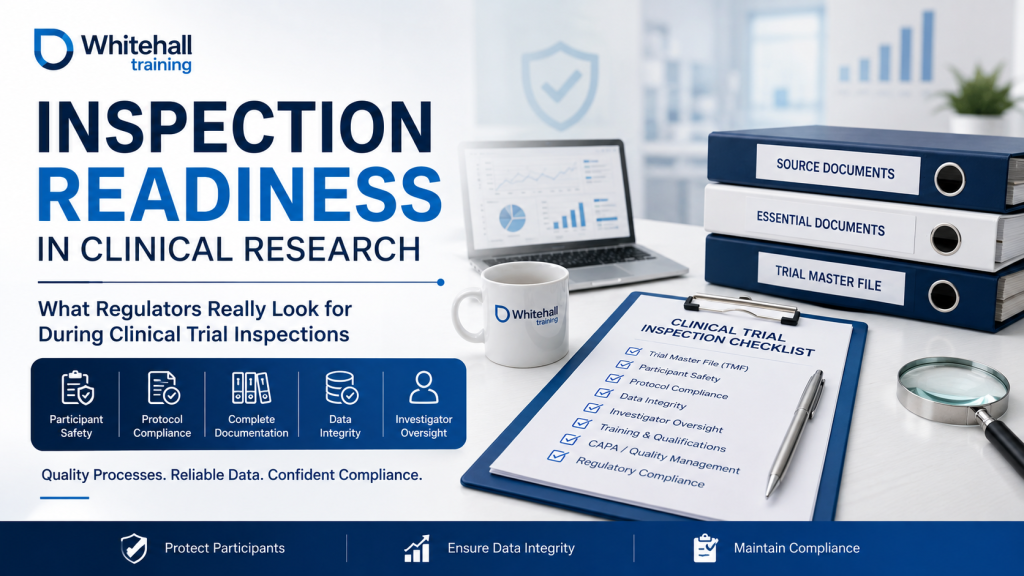
  • Inspection Readiness in Clinical Research: What Regulators Really Look for During Clinical Trial Inspections 

    Introduction 

    Clinical trial inspections are not simply regulatory checkpoints—they are comprehensive evaluations of how effectively a study has been planned, conducted, documented, and managed. Regulatory authorities such as the FDA, EMA, and MHRA assess whether participant safety has been protected, data integrity has been maintained, and Good Clinical Practice (GCP) requirements have been consistently followed. 

    Many organisations begin preparing only after receiving an inspection notice. However, successful inspections are rarely the result of last-minute preparation. Inspection readiness is built throughout the entire clinical trial lifecycle, beginning on the very first day of the study. 

    This article explores what regulators typically review during inspections, common compliance gaps, and practical strategies organisations can adopt to remain inspection-ready at all times. 

    What Is Inspection Readiness? 

    Inspection readiness refers to an organisation’s ability to demonstrate, at any point during a clinical trial, that the study has been conducted in accordance with the approved protocol, applicable regulations, and ICH Good Clinical Practice (GCP). 

    It involves maintaining complete documentation, effective quality systems, trained personnel, and consistent operational processes throughout the study—not only when an inspection is announced. 

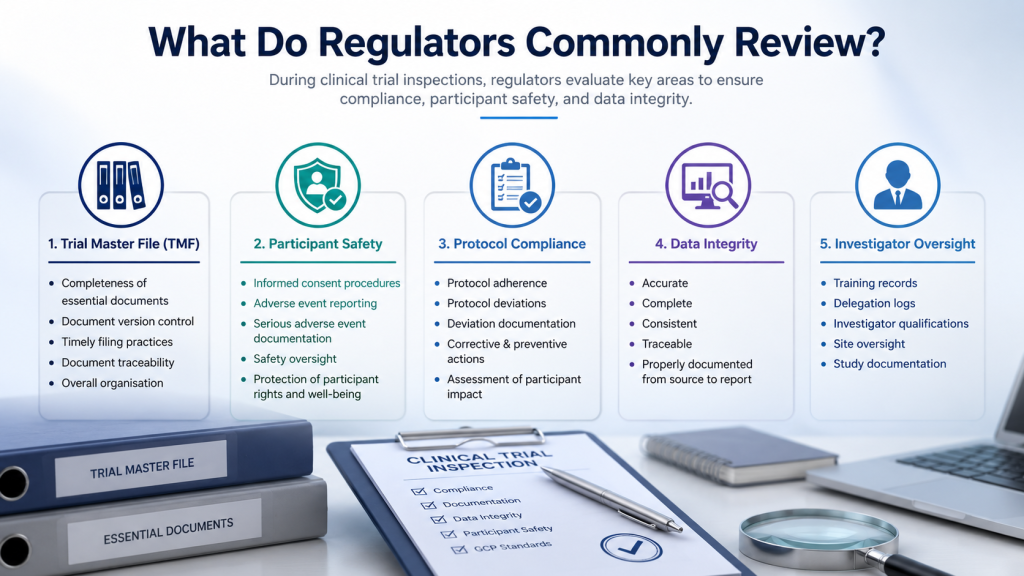
    What Do Regulators Commonly Review? 

    1. Trial Master File (TMF) 

    The Trial Master File provides evidence that a clinical trial has been conducted in compliance with regulatory requirements. 

    Inspectors evaluate: 

    • Completeness of essential documents  
    • Document version control  
    • Timely filing practices  
    • Document traceability  
    • Overall organisation of the TMF  

    2. Participant Safety 

    Protecting participants remains the highest priority during every inspection. 

    Regulators verify: 

    • Proper informed consent procedures  
    • Timely reporting of adverse events  
    • Serious adverse event documentation  
    • Safety oversight throughout the study  
    • Protection of participant rights and well-being  

    3. Protocol Compliance 

    Inspectors review whether study activities were performed according to the approved protocol. 

    Key areas include: 

    • Protocol deviations  
    • Documentation of deviations  
    • Corrective and preventive actions  
    • Assessment of participant impact  
    • Ongoing protocol oversight  

    4. Data Integrity 

    Reliable clinical data depends on accurate documentation and controlled processes. 

    Regulators examine whether data is: 

    • Accurate  
    • Complete  
    • Consistent  
    • Traceable  
    • Properly documented from source records to final reports  

    5. Investigator Oversight 

    Inspectors also assess whether investigators have fulfilled their responsibilities throughout the study. 

    This includes reviewing: 

    • Training records  
    • Delegation logs  
    • Investigator qualifications  
    • Site oversight  
    • Study documentation  

    Common Inspection Findings 

    Many inspection observations result from routine operational issues rather than major regulatory failures. 

    Common findings include: 

    • Missing or incomplete documentation  
    • Delayed document filing  
    • Inadequate protocol deviation management  
    • Poor document version control  
    • Missing signatures or dates  
    • Incomplete staff training records  
    • Inconsistent source documentation  

    Most of these findings can be prevented through proactive quality management and continuous compliance practices. 

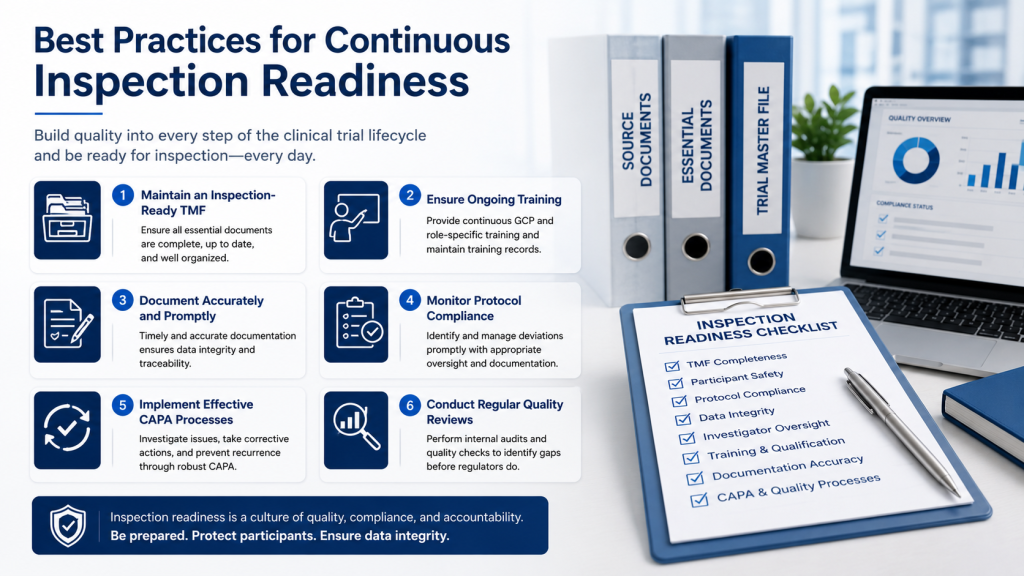
    Best Practices for Continuous Inspection Readiness 

    Organisations can strengthen inspection readiness by: 

    • Maintaining an inspection-ready Trial Master File throughout the study.  
    • Performing regular internal quality reviews.  
    • Providing continuous GCP and role-specific training.  
    • Documenting activities accurately and promptly.  
    • Monitoring protocol compliance on an ongoing basis.  
    • Implementing effective CAPA processes when issues are identified.  
    • Encouraging a culture of quality rather than reactive compliance.  

    Why Inspection Readiness Should Be a Continuous Process 

    Inspection readiness is not a project that begins when regulators announce a visit. It is an ongoing commitment to quality, documentation, and compliance throughout every phase of a clinical trial. 

    Organisations that integrate inspection readiness into their daily operations are better positioned to protect participant safety, maintain data integrity, and successfully navigate regulatory inspections with confidence. 

    Conclusion 

    Clinical trial inspections evaluate much more than documentation—they assess the overall quality systems supporting the study. 

    By maintaining accurate records, ensuring protocol compliance, protecting participant safety, and fostering a culture of continuous quality improvement, organisations can significantly reduce inspection risks while improving the overall quality of clinical research. 

    Inspection readiness should never be viewed as a last-minute activity. It is a continuous process that begins with the first study activity and continues until trial completion. 

  • Understanding ALCOA+ in Clinical Research: Building Data Integrity Through Good Documentation

    Introduction

    Clinical trials generate thousands of records throughout the study lifecycle, including informed consent forms, source documents, laboratory reports, electronic case report forms (eCRFs), monitoring reports, and regulatory documentation. These records form the evidence used to evaluate the safety, efficacy, and quality of investigational products.

    The reliability of clinical trial outcomes depends not only on the data collected but also on the integrity of the documentation supporting it. Incomplete, inaccurate, or poorly maintained records can compromise participant safety, delay regulatory approvals, and result in inspection findings.

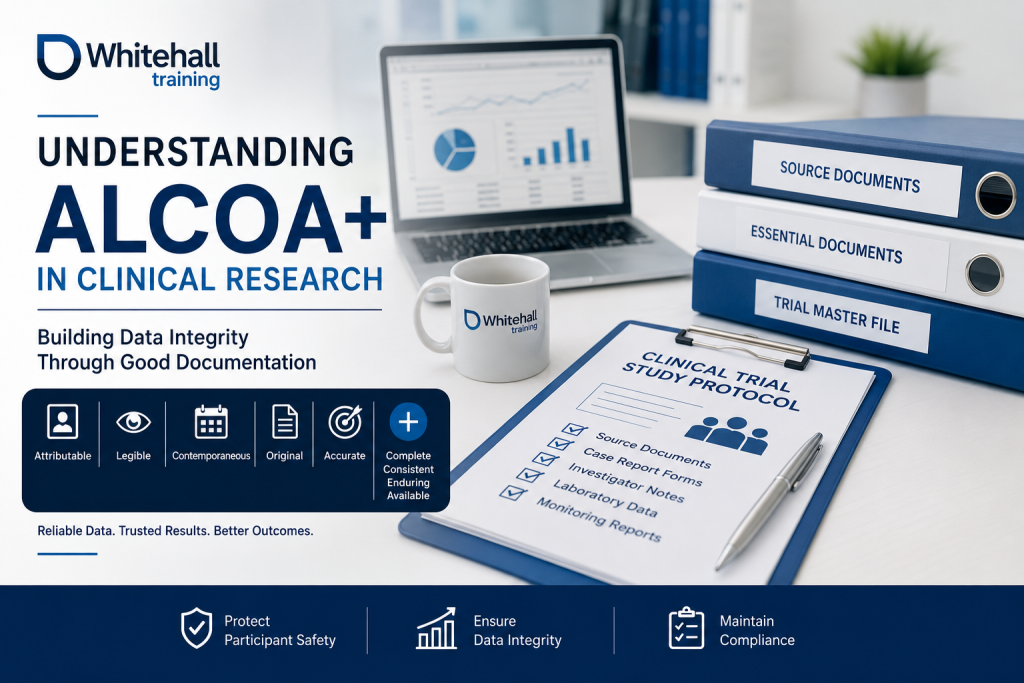
    To help maintain high-quality data, regulatory authorities continue to emphasise the ALCOA+ principles, a globally recognised framework for ensuring data integrity in clinical research.

    What is ALCOA+?

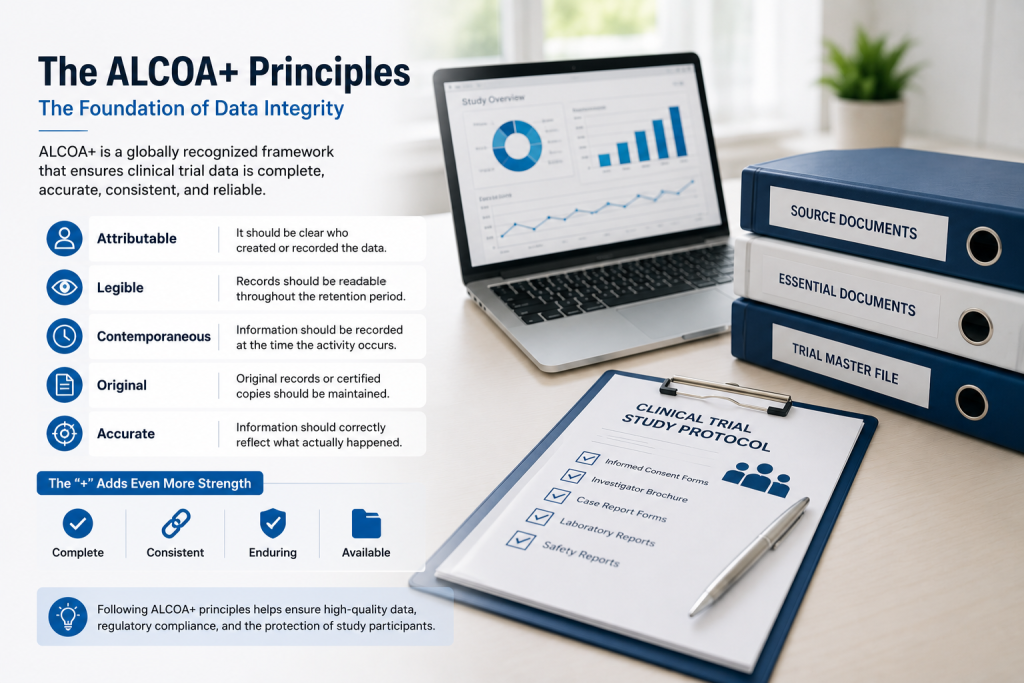
    ALCOA+ is a framework that defines the characteristics of high-quality clinical research documentation.

    Every clinical trial record should be:

    • Attributable – It should be clear who created or recorded the information.
    • Legible – Documentation should remain readable throughout the required retention period.
    • Contemporaneous – Information should be recorded at the time the activity occurs.
    • Original – Original records or certified copies should be maintained.
    • Accurate – Information should correctly reflect the activity performed.

    The “+” extends these principles by ensuring records are also:

    • Complete
    • Consistent
    • Enduring
    • Available

    Together, these principles help ensure clinical trial data remains reliable, traceable, and suitable for regulatory review.

    Why is ALCOA+ Important?

    Regulatory authorities rely on clinical trial data when evaluating the safety and effectiveness of investigational medicinal products.

    Poor documentation may lead to:

    • Inspection findings
    • Increased data queries
    • Protocol deviations
    • Delays in regulatory submissions
    • Reduced confidence in study results

    Applying ALCOA+ principles consistently helps protect:

    • Participant safety
    • Data integrity
    • Regulatory compliance
    • Sponsor credibility
    • Inspection readiness

    Regulatory Expectations

    The importance of ALCOA+ is reflected in several international regulatory guidelines.

    These include:

    • ICH GCP E6(R3), which emphasises reliable documentation, quality management, and risk-based oversight throughout clinical trials.
    • FDA Guidance on Data Integrity, which highlights the importance of complete, accurate, and trustworthy records.
    • MHRA GxP Data Integrity Guidance, reinforcing expectations for maintaining reliable documentation across regulated activities.
    • EMA Good Clinical Practice expectations, supporting data quality and participant protection throughout the clinical trial lifecycle.

    Although each authority uses different wording, they all share the same expectation: clinical trial data must be complete, accurate, traceable, and reliable.

    ALCOA+ in Practice

    Consider a routine monitoring visit conducted by a Clinical Research Associate (CRA).

    During source data verification, the CRA identifies that a participant attended a scheduled follow-up visit outside the protocol-defined visit window. The visit has been entered into the eCRF, but the reason for the delay has not been documented in the participant’s source records.

    To maintain compliance and data integrity, the CRA should:

    • Confirm why the visit occurred outside the permitted window.
    • Ensure the protocol deviation is documented appropriately.
    • Assess whether participant safety or study endpoints have been affected.
    • Verify that sponsor reporting procedures have been followed.
    • Confirm any corrective actions have been implemented by the study site.

    Applying ALCOA+ principles throughout this process helps ensure the clinical trial remains inspection-ready while maintaining confidence in the study data.

    Common Documentation Challenges

    Some of the most frequently observed documentation issues during monitoring visits and regulatory inspections include:

    • Missing signatures or initials
    • Illegible handwritten entries
    • Backdated documentation
    • Incorrect correction methods
    • Missing source documentation
    • Inconsistent dates across study records
    • Poor documentation of protocol deviations

    Many of these issues can be prevented through consistent application of ALCOA+ principles and ongoing Good Clinical Practice training.

    Best Practices for Maintaining Data Integrity

    Clinical research teams can strengthen documentation quality by:

    • Recording study activities immediately after they occur.
    • Following approved procedures for corrections and amendments.
    • Maintaining clear and traceable source documentation.
    • Reviewing documentation before monitoring visits.
    • Providing regular GCP and documentation training.
    • Encouraging continuous quality improvement across study teams.

    Conclusion

    High-quality clinical research depends on trustworthy data.

    The ALCOA+ principles provide a practical framework for ensuring documentation remains complete, accurate, and inspection-ready throughout the clinical trial lifecycle.

    By embedding these principles into everyday clinical research activities, organisations can strengthen regulatory compliance, improve data quality, and support better outcomes for both participants and sponsors.

    Continue Your Professional Development

    Develop a deeper understanding of Good Clinical Practice, protocol compliance, and clinical trial quality management through Whitehall Training’s professional courses:

    Implementing ICH GCP E6(R3)

    https://www.whitehalltraining.com/good-clinical-practice/english-r3-version

    ICH GCP E6(R3) Refresher

    https://www.whitehalltraining.com/good-clinical-practice/r3-version-refresher

    Clinical Research Associate (CRA) Essentials

    https://www.whitehalltraining.com/good-clinical-practice/r3-cra

    Clinical Research Associate (CRA) Learning Path

    https://www.whitehalltraining.com/learning-path/cra-guide

    Explore our full Clinical Research and Good Clinical Practice portfolio:
    https://www.whitehalltraining.com/good-clinical-practice/

  • What Is Good Clinical Practice (GCP) and Why Does the new Annex 2 Matter?

    Whitehall Training — GCP & Clinical Research Blog

    If you are starting out in clinical research — as a CRA, a site coordinator, a junior regulatory affairs associate, or a student weighing up the field — you will hear the phrase “GCP” within your first week. It appears in job adverts, training requirements, protocols and contracts, usually without anyone stopping to explain it. This post does the explaining: what Good Clinical Practice actually is, why the industry treats it as non-negotiable, and why the newest addition to the GCP rulebook — Annex 2 of ICH E6(R3), adopted in June 2026 — matters even if you have never worked on a clinical trial before.

    GCP in one sentence

    Good Clinical Practice is the international ethical and scientific quality standard for designing, conducting, recording and reporting clinical trials that involve human participants. It exists to guarantee two things at once: that the rights, safety and well-being of trial participants are protected, and that the data generated by the trial are credible — reliable enough for a regulator to base an approval decision on.

    Those two aims are inseparable, and that is the key insight most newcomers take a while to absorb. A trial that protects its participants but produces unreliable data has wasted those participants’ contribution. A trial that produces beautiful data by cutting ethical corners is worthless too, because data obtained unethically cannot be trusted or used. GCP is the framework that holds both together.

    The standard itself comes from the International Council for Harmonisation (ICH), whose guideline ICH E6 is the globally recognised statement of GCP. Regulators in the UK, EU, US, Japan and most other major markets either adopt it directly or align their national law to it. That is why GCP training transfers between employers and between countries: everyone is working from the same text.

    Why does it exist? Because the alternative was tested — on people

    GCP was not invented in the abstract. It is the accumulated response to real harms: unethical experimentation exposed after the Second World War, which produced the Nuremberg Code and later the Declaration of Helsinki; the thalidomide disaster, which showed what happens when medicines reach patients without adequate evidence; and a long series of research scandals in which participants were enrolled without genuine consent or exposed to risks they never agreed to. Each failure added a layer of protection — voluntary informed consent, independent ethics review, systematic safety reporting — and GCP is where those layers are codified into a single working standard.

    What GCP looks like in the day-to-day job

    For working professionals, GCP is not an abstract code — it is the reason behind most of the routine tasks in a trial. Informed consent must be obtained, documented and dated before any trial procedure. An independent ethics committee (an IRB or IEC) must approve the protocol and consent materials before anyone is enrolled. Every trial task must be performed by someone qualified, trained and formally delegated to do it. Safety events must be identified, assessed and reported within strict timelines. Investigational medicines must be accounted for from arrival to return or destruction. And everything — all of it — must be documented, because in GCP the working assumption is simple: if it isn’t documented, it didn’t happen. The essential documents of a trial live in the Trial Master File, the evidentiary record that allows an inspector to reconstruct the trial years later.

    If that sounds bureaucratic, reframe it: every one of those requirements traces back to either protecting a human being or protecting the integrity of evidence that future patients will depend on. That is also why GCP compliance is inspected, and why serious breaches can invalidate data, halt trials and end careers.

    The current standard: ICH E6(R3)

    The GCP guideline has been revised as trials have evolved. The current version, E6(R3), is built deliberately in layers: a set of overarching Principles that apply to every interventional clinical trial, and annexes that translate those principles into specific expectations. Annex 1 covers the traditional model most people picture — participants attending visits at an investigator site, with the investigator’s team performing the assessments.

    But that traditional picture no longer describes many modern trials. Participants now wear sensors at home, complete questionnaires on their phones, receive study medication by courier, see research nurses in their living rooms, and have parts of their data drawn from routine health records rather than trial-specific measurements. The COVID-19 pandemic accelerated all of this from experiment to mainstream. The question the industry faced was: how does GCP apply when the trial leaves the site?

    Enter Annex 2 — what’s actually new

    Annex 2 of ICH E6(R3), adopted in its final form on 3 June 2026, is the answer. It provides additional GCP considerations for trials that incorporate any of three things: decentralised elements (trial activities happening somewhere other than the traditional site — remote visits, home nursing, telemedicine, wearable digital health technologies), pragmatic elements (design features that fold the trial into routine clinical practice, including local healthcare professionals contributing within their usual care), and real-world data (using sources like electronic health records, registries and claims data in an interventional trial).

    Two framing points prevent the most common misunderstandings. First, Annex 2 does not endorse or require any of these methodologies — it tells you what GCP looks like if you use them. Second, it does not replace anything: the Principles and Annex 1 still apply, and Annex 2 adds considerations on top.

    Within that scope, the new obligations are strikingly concrete. Remote informed consent must be pre-specified and supported by identity verification — you must know that the person consenting on a video call is who they claim to be. Digital health technologies must be assessed as fit for purpose for the clinical measurement they make, with validation evidence, audit trail ownership, cybersecurity and privacy controls, and defined routes for safety data — a vendor’s brochure saying “validated” is not enough. Shipping investigational product directly to a participant’s home triggers a chain of requirements covering investigator authorisation, courier qualification, cold-chain management, privacy, confirmation of the intended recipient and accountability. Real-world data must pass a fitness-for-purpose assessment covering reliability, relevance, completeness and traceability before it can support trial conclusions. And because modern trials involve nursing agencies, device vendors and third-party data holders, Annex 2 is explicit about multi-party oversight: sponsors and investigators can delegate activities, but never accountability. When a home nurse observes a worrying symptom on a Friday evening, there must be a pre-designed escalation pathway that gets that information to the investigator fast — a weekly batch upload is a patient-safety failure, not an IT preference.

    Running through all of it is a proportionate, risk-based philosophy — Quality by Design. Identify what is critical to the quality of your trial, put your controls there, and avoid burdening the trial (and its participants) with controls that protect nothing.

    Why this matters to you

    If you are new to the field, Annex 2 is not an advanced footnote — it describes the trials you will actually work on. Hybrid designs, ePRO apps, home nursing and EHR-derived data are now ordinary features of clinical research, and regulators have made clear that inspections will probe exactly these areas: How was the nursing agency overseen? Who owns the wearable’s audit trail? Where is the authorisation for that direct-to-participant shipment? Professionals who understand both classical GCP and the Annex 2 layer are the ones who can answer.

    And beneath the career logic sits the same principle that has driven GCP from the beginning. Decentralised methods genuinely serve patients — they open trials to people who live far from research centres, who cannot take time off work, who are too unwell to travel. But innovation only serves patients if their protection travels with the trial into their homes. That is what Annex 2 exists to guarantee, and learning it is what turns “GCP-trained” from a checkbox into a professional capability.

    How you actually learn this: scenarios, not slogans

    Reading the regulatory text is necessary but rarely sufficient — Annex 2, like all of GCP, only makes sense when you watch it collide with a real trial. That is why Whitehall Training’s Implementing ICH GCP E6(R3) Annex 2 course is built around eight extended clinical scenarios, one per module, each engineered to show how modern trial designs fail when the framework is ignored — and what “in control” looks like when it is applied.

    A few examples give the flavour. In the hybrid oncology scenario (the OrAL-1 trial), participants take an oral targeted therapy at home while agency nurses perform toxicity grading visits under investigator responsibility; a courier delay strands a blood sample, and separately a nurse records a new cough and fatigue but fails to escalate within the required 24-hour window. Learners trace the responsibility chain and discover that the true failures were systemic — inadequate agency training on escalation triggers and no real-time safety reporting route — not one nurse’s oversight. In the cardiology wearable scenario, a vendor silently pushes a firmware update that zeroes the AF-burden algorithm across 28 participants, destroying 196 participant-days of primary endpoint data; the lesson is that one missing contract clause (sponsor approval before any firmware change) would have prevented the entire loss. In the diabetes Quality-by-Design workshop, a sponsor team initially picks a consumer glucose monitor on convenience grounds — a classic QbD failure — and the scenario walks through the correction to a trial-grade validated device with standardised firmware and a calibration log. And in the closing inspection scenario, learners sit in the Clinical QA Lead’s chair while an inspector asks four questions every hybrid trial must be able to answer: How is your nursing agency oversight evidenced? Who owns the wearable’s audit trail? Where is the investigator’s authorisation for that direct-to-participant shipment? How can I access the source records behind your real-world data?

    The course pairs each scenario with working tools you keep — ten downloadable checklists and templates adapted directly from Annex 2 obligations, including the Decentralised Trial Risk Assessment Template, the Digital Health Technology Evaluation Checklist, the three-part Responsibility Matrix for sponsors, investigators, IRBs/IECs and service providers, the Participant Safety Escalation Pathway Template and the Inspection Readiness Checklist for Annex 2 trials. For a newcomer, these tools are more than course materials: they are a preview of the actual working documents you will encounter in a sponsor or CRO quality system.

    Documentation is where GCP lives — the TMF connection

    There is one more thread every new clinical research professional should pick up early, because it connects everything above: documentation. Whether a trial is site-based or fully decentralised, GCP compliance is ultimately demonstrated through the Trial Master File — the collection of essential documents that, in the words of ICH E6(R3), individually and collectively permit evaluation of the conduct of the trial and the quality of the data produced.

    Whitehall Training’s ebook, The Trial Master File: The Practitioner’s Guide to TMF and eTMF, distils this into a framework worth memorising on day one. TMF management rests on three pillars — completeness (are all expected documents present?), timeliness (were they filed when the activity happened?) and quality (are they signed, dated, legible and attributable?) — and a file that is strong on one pillar but weak on another is not inspection-ready. The guide’s illustration has become something of a Whitehall classic: a site files four months of monitoring reports on the same day, one week before an inspection. The completeness score looks perfect; the filing dates tell the inspector that oversight was absent for four months. Completeness without timeliness is not a well-maintained file — it is a confession with good formatting.

    The guide’s deeper test is reconstructability: if an inspector with no prior knowledge of your trial read the file, could they establish what actually happened? This test catches what completeness percentages miss — documents that are all present but contradict each other, monitoring logs that describe visits no report supports, delegation logs naming one PI while consent forms carry another’s signature. Broken reconstructability is the ultimate TMF failure, because it compromises the trial’s evidentiary foundation at the deepest level.

    Annex 2 raises the stakes here rather than lowering them. When trial activities scatter across nursing agencies, device vendors, couriers and third-party data holders, the essential records scatter with them — and Module 8 of the Annex 2 course addresses exactly this: TMF completeness in the Annex 2 context, records availability to investigators and inspectors, and how to storyboard your oversight narrative before an inspection rather than during one. The ebook’s “ten habits of TMF excellence” translate directly: file within 48 hours; have the PI review the file personally every month; sign monitoring letters within two weeks; keep the delegation log current the day staff change; hold consent documentation to zero defects; log every deviation within five business days of identification, whether you found it or the monitor did. These habits are observable in every site with a consistently clean inspection record — and absent in most sites that generate persistent findings.

    For someone entering the field, this is encouraging news. GCP mastery is not an encyclopaedic memory of guideline paragraphs; it is a small set of disciplined habits, a framework for thinking about risk, and the ability to show your work. All three can be learned — and they compound over a career.


    Ready to build that capability? Whitehall Training offers an ICH GCP E6(R3) foundation course covering the Principles and Annex 1 in full, and the advanced Implementing ICH GCP E6(R3) Annex 2 course — eight scenario-based modules on decentralised trials, digital health technologies, real-world data, participant safety and inspection readiness, with ten downloadable working tools and a CPD certificate (available together as the GCP E6(R3) + Annex 2 Implementation Bundle). To go deeper on documentation, the four-module TMF Excellence programme and the ebook The Trial Master File: The Practitioner’s Guide to TMF and eTMF cover TMF architecture, population, inspection readiness and eTMF management end to end. Explore the full curriculum at whitehalltraining.com.
  • How to Maintain a GCP-Compliant Trial Master File (TMF)

    Whitehall Training — GCP & Clinical Research Blog

    There is a moment in every GCP inspection that separates well-run sites from the rest. The inspector asks for a specific document — a consent form, a monitoring letter, a temperature log — and either it is produced within two minutes, or the room goes quiet while people start opening filing cabinets. Experienced inspectors say they can form an initial impression of a site’s TMF quality in about two minutes, and roughly 85% of GCP inspection findings relate to documents that exist but are incomplete, incorrectly filed, or unsignable. In other words: most TMF failures are not about missing paperwork. They are about maintenance.

    This post sets out the practical disciplines that keep a Trial Master File genuinely GCP-compliant — not just tidy for the next monitoring visit, but inspection-ready at any point in the trial.

    Start from what the TMF actually is

    ICH-GCP E6(R3) Section 8 defines essential documents as those that “individually and collectively permit evaluation of the conduct of a trial and the quality of the data produced.” That definition is worth internalising, because it reframes the TMF from a filing obligation into an evidentiary one. If an activity cannot be reconstructed from the file, then from a regulator’s perspective it cannot be verified — and for something like informed consent, absence of the document is treated as absence of the activity.

    Remember that the trial file lives in two places. The sponsor (or CRO) holds the study-wide TMF — protocol, IB versions, regulatory submissions, monitoring plans, safety reports — while the site holds the Investigator Site File (ISF): CVs and licences, delegation logs, consent forms, IRB/IEC approvals, subject logs and site correspondence. Both must be inspection-ready, and delegation of the day-to-day filing does not transfer accountability. The sponsor remains responsible for the overall TMF even when a CRO manages it, and the PI remains responsible for the ISF even when a coordinator does the filing.

    E6(R3) organises essential documents across three phases — before the trial (8.2), during (8.3) and after completion (8.4) — and most sponsors structure the file using the DIA TMF Reference Model’s zones, sections and artifacts. Whichever structure you use, the test is the same: can any monitor or inspector locate any document quickly, and does the file cover all three phases without gaps?

    Make ALCOA+ the standard for every document

    ALCOA+ is usually taught as a source-data principle, but it is equally the standard against which every TMF document is judged. Every entry should be attributable (who did this?), legible (readable now and in 15 years), contemporaneous (created at the time of the activity), original (or a properly certified copy), and accurate — with the “+” adding completeness, consistency, endurance and availability.

    The most damaging findings occur when a document fails several dimensions at once. A retrospectively created entry that is unsigned and doesn’t match other records is no longer a documentation error; it looks like data manipulation. That is how a minor filing lapse becomes a critical finding.

    Corrections deserve special discipline: a single line through the error so the original remains legible, then initials, date and reason. No correction fluid, no overwriting, and never backdating — writing a correction against the original visit date instead of the date the correction was actually made is document fraud, full stop.

    File contemporaneously — timeliness is evidence

    Completeness gets all the attention, but timeliness is what tells an inspector whether oversight was actually happening. A good working rule is to file documents within 48 hours of receipt or creation, note the date of receipt on incoming documents, and keep the ISF index current so gaps surface before someone else finds them.

    Inspectors actively look for the batch-filing pattern: four monitoring visit reports covering a four-month period, all filed on the same day a week before the inspection was announced. The documents are authentic, but the filing dates tell the real story — the reports sat unread while the trial continued. Consistency of filing, not just completeness, is the visible evidence of a quality culture.

    Concentrate effort where inspectors concentrate theirs

    Inspection data from FDA, EMA and MHRA is remarkably consistent about where TMFs fail. Consent documentation, oversight documentation (unsigned monitoring letters, delegation log gaps) and safety documentation together account for the large majority of findings. So a maintenance routine should give structured, recurring attention to the high-risk documents first: every enrolled subject’s consent form (signed, dated, correct IRB-approved version, dated before the first trial procedure, with re-consent documented after ICF amendments); a delegation log that matches reality, updated whenever staff join, leave or change roles; monitoring visit letters reviewed, actioned and signed by the PI within the agreed window; a deviation log that captures all deviations — including the ones nobody outside the site has noticed yet — each with an impact assessment and corrective action; a complete SAE chain from source record through report, sponsor acknowledgement and follow-up to resolution; and IMP accountability records that reconcile, with continuous temperature logs and explanations for any gap.

    A deviation noted in visit notes but absent from the deviation log is a major finding. A site that logs deviations only when the monitor identifies them is heading for a critical one. Self-identification is the marker of a functioning quality system.

    Measure your TMF health — then act on the trend

    You cannot manage what you do not measure, and TMF quality is measurable on three dimensions: completeness (are all expected documents present?), timeliness (were they filed when expected?) and quality (are they signed, dated, legible, correct-version?). Calculate completeness against the expected document list for your trial — present-and-complete divided by total applicable documents. A score of 90% or better is generally acceptable for an active trial; aim for 95%+ when approaching closeout or an inspection. Keep an eye on the denominator, too: a score that plateaus for months often means the expected-document list hasn’t been updated as the trial generates new monitoring visits, amendments and safety reports.

    Then build the review rhythm that keeps those numbers honest: a monthly completeness review against a DIA-based or sponsor checklist, a quarterly documented review by the PI, and a formal self-inspection at least annually — plus before any audit, after significant staff change, and within 30 days of receiving an inspection notice. A half-day self-inspection (inventory, content review, cross-referencing, prioritised gap list, assigned remediation) consistently finds the same issues an inspector would, months earlier and on your terms. File the self-inspection report in the TMF: it is itself evidence of quality oversight.

    Know the line between preparation and manipulation

    When an inspection is announced, there is a clear boundary between legitimate preparation and misconduct. You may file authentic documents that were received but never filed (dated with the actual filing date), update the delegation log for changes that genuinely occurred, create deviation log entries for newly identified deviations using today’s date, and reorganise or re-index the file. You may not backdate anything, recreate “missing” originals, ask staff to sign documents they don’t remember, destroy or alter records, or coach staff to give scripted answers. Filing a late document transparently creates a small finding; fabricating one creates a career-ending finding.

    The eTMF raises visibility, not reduces obligations

    Most trials now run on electronic TMF systems, and it is tempting to assume the platform does the compliance for you. It does not. The eTMF is a system, not a different set of requirements — ALCOA+, completeness and the 48-hour filing standard apply identically. What changes is visibility: a paper gap can hide for months, while an eTMF gap appears on a completeness dashboard in real time, visible to you, the sponsor and potentially a remote inspector.

    Electronic records bring their own obligations under FDA 21 CFR Part 11 and the EU’s electronic-records expectations: unique user accounts (never shared credentials), prompt access revocation when staff leave, preserved audit trails, and validated systems. The site’s share of that responsibility includes upload quality — correct section, accurate metadata, legible scans at 300dpi minimum, final versions only — and certified copies done properly, with a signed, dated statement that the copy is complete and accurate. Two things sites regularly get wrong: original signed consent forms must be retained at site even after certified scans are uploaded, and audit trails must be preserved with the documents throughout the retention period, including through any system migration or vendor decommissioning.

    Since remote and hybrid inspections became a permanent part of the regulatory toolkit, eTMF fluency has become an inspection competency in its own right. If you cannot log in, navigate to a requested document within seconds and explain your completeness dashboard on a screen share, you will look unprepared regardless of how good the underlying file is.

    Plan the whole lifecycle — including the end

    TMF obligations do not end at last patient, last visit. Essential documents must be retained for at least 15 years under ICH-GCP expectations and a minimum of 25 years under EU CTR 536/2014 — and subject identification code lists are retained securely at site, separate from sponsor-facing records. Before anything goes to an archive, complete a full completeness review, create a document-level inventory, and confirm the archive facility is qualified and contracted for the full retention period; a lost box discovered at a year-two inspection is a critical finding with no remediation path. And when a PI leaves, custody of the file must be formally transferred in writing, signed by both parties, with the sponsor notified — one of the most common and most avoidable sources of TMF gaps.

    Maintenance is a mindset, not an event

    The sites that come through inspections cleanly are not the ones where nothing ever went wrong. They are the ones where every event is documented, every correction follows the GCP standard, every deviation is logged and assessed, and every monitoring letter has been read and signed. Inspectors are not looking for a perfect trial; they are looking for a site that knows about its problems, documents them honestly and manages them systematically.

    Treat the TMF as a live record of how the trial is being managed — reviewed monthly, measured quarterly, self-inspected annually — and inspection readiness stops being a scramble and becomes a by-product of the way you already work.


    Want to go deeper? Whitehall Training’s four-module TMF Excellence programme covers TMF architecture and regulatory requirements, source documentation standards, inspection readiness and quality review, and eTMF management and remote inspection preparedness — with case studies drawn from real FDA, EMA and MHRA inspection findings. Explore the course at whitehalltraining.com.

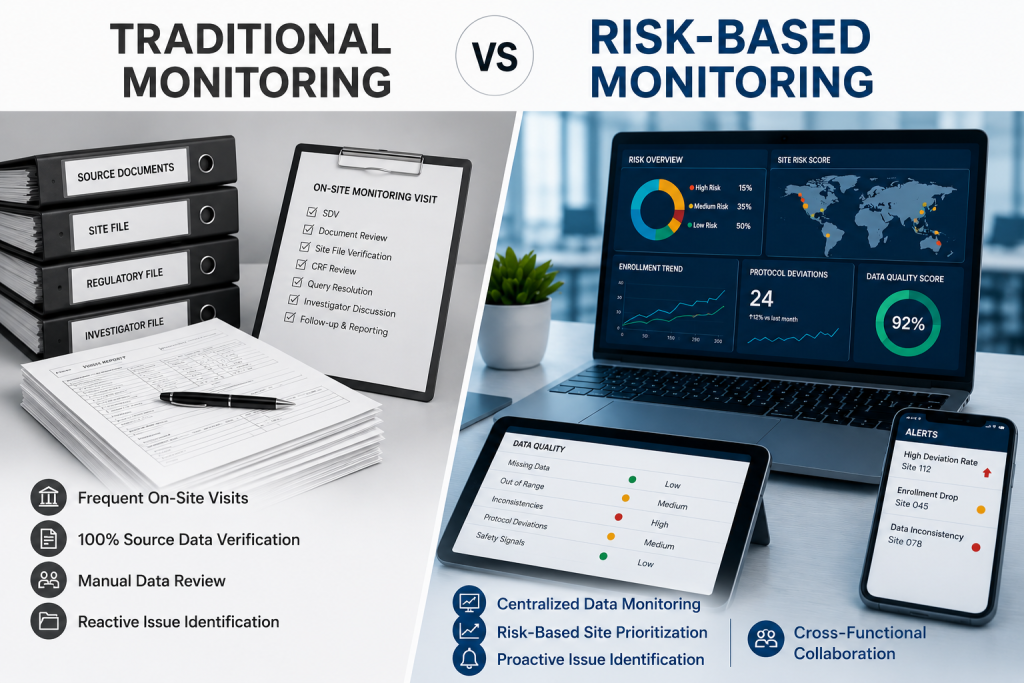
  • Why Risk-Based Monitoring Is Reshaping CRA Responsibilities in 2026

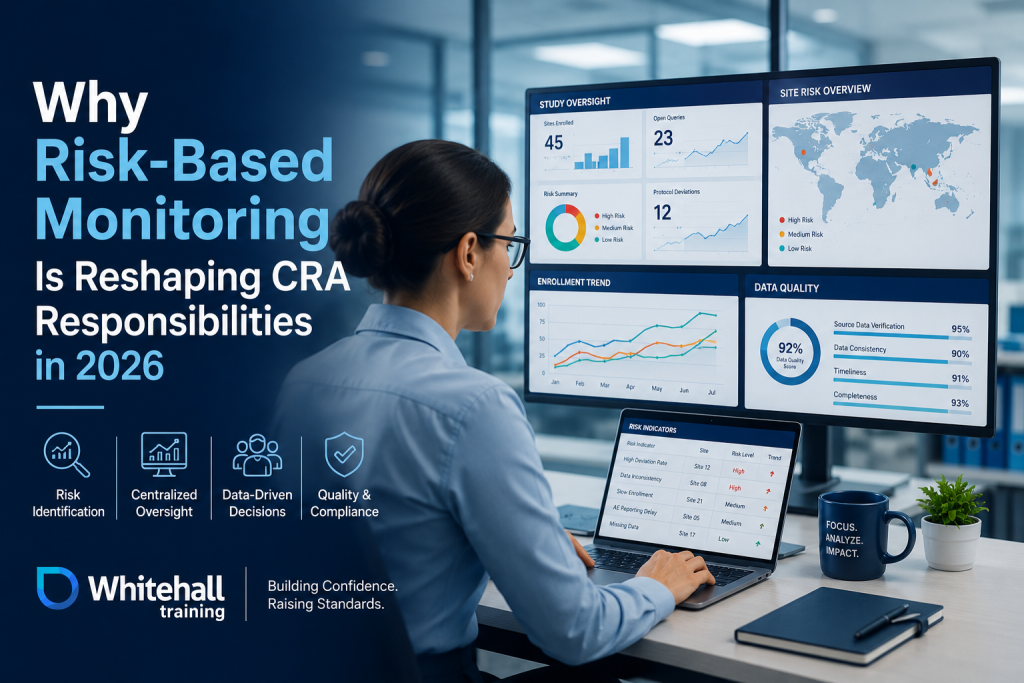
    Clinical trial monitoring continues to evolve as sponsors and CROs increasingly adopt risk-based approaches to oversight.

    Traditional monitoring models that relied heavily on frequent on-site visits and 100% source data verification are gradually being replaced by more centralized, data-driven strategies.

    As a result, the responsibilities of Clinical Research Associates (CRAs) are also changing.

    In 2026, CRAs are expected to manage far more than routine site visits and documentation review. Modern clinical trials now require stronger analytical oversight, technology awareness, remote collaboration, and risk-based decision-making.

    The Shift Toward Risk-Based Monitoring

    Risk-Based Monitoring (RBM) was introduced to improve trial efficiency while maintaining patient safety and data integrity.

    Rather than applying equal monitoring intensity across all sites and data points, RBM focuses oversight on areas that present the highest operational or clinical risk.

    This includes:

    • critical data points
    • patient safety indicators
    • protocol deviation trends
    • site performance metrics
    • enrollment abnormalities
    • centralized data review findings

    The increasing use of RBM reflects the growing complexity of decentralized and technology-enabled clinical trials.

    How CRA Responsibilities Are Changing

    Under traditional monitoring models, CRA responsibilities focused heavily on:

    • routine site visits
    • source document verification
    • regulatory document review
    • investigator site file checks
    • query resolution

    While these activities remain important, RBM has expanded the role significantly.

    Modern CRA responsibilities increasingly include:

    • remote oversight activities
    • centralized data review collaboration
    • trend identification
    • site risk assessment
    • vendor coordination
    • technology platform oversight
    • risk escalation management

    CRAs are now expected to interpret operational signals rather than simply review documentation.

    Increased Reliance on Centralized Monitoring

    Many sponsors now combine on-site monitoring with centralized monitoring teams that review:

    • real-time study data
    • protocol deviation patterns
    • missing data trends
    • unusual enrollment activity
    • electronic system alerts

    This model allows organizations to identify issues earlier and prioritize monitoring resources more effectively.

    As a result, CRAs increasingly work alongside:

    • centralized monitoring teams
    • data managers
    • quality specialists
    • risk management personnel
    • decentralized trial vendors

    Cross-functional collaboration has become a critical part of modern monitoring operations.

    The Impact of Decentralized Clinical Trials

    The expansion of decentralized clinical trial models has accelerated the adoption of RBM strategies.

    Remote visits, wearable technologies, electronic consent platforms, and home healthcare providers create new oversight challenges that cannot always be managed through traditional monitoring methods alone.

    CRAs must now evaluate:

    • remote data reliability
    • digital platform compliance
    • vendor oversight processes
    • remote patient activity documentation
    • electronic system traceability

    Monitoring responsibilities increasingly extend beyond physical investigator sites.

    Technology Skills Are Becoming Essential

    Modern clinical research environments rely heavily on:

    • electronic data capture systems
    • risk dashboards
    • remote monitoring tools
    • cloud-based trial platforms
    • AI-assisted analytics
    • digital quality management systems

    As monitoring models evolve, CRAs are expected to become more comfortable interpreting centralized data outputs and technology-generated risk indicators.

    Operational understanding of digital trial infrastructure is becoming increasingly valuable.

    Operational Challenges Associated With RBM

    Although RBM offers efficiency advantages, implementation also introduces operational complexity.

    Organizations may face challenges involving:

    • inconsistent risk assessment approaches
    • communication gaps between centralized and field teams
    • technology integration limitations
    • vendor coordination difficulties
    • staff adaptation to new monitoring models

    For CRAs, balancing remote oversight with effective site relationships remains an ongoing challenge.

    Regulatory Expectations Continue To Evolve

    Global regulatory agencies increasingly support risk-based approaches when supported by appropriate quality management systems and documented oversight strategies.

    However, regulators still expect sponsors and CROs to demonstrate:

    • adequate trial oversight
    • data reliability
    • patient protection
    • effective issue escalation
    • documented risk management processes

    RBM does not reduce compliance expectations. Instead, it changes how oversight is applied.

    The Future of CRA Roles

    The CRA role is not disappearing.

    Instead, it is becoming more analytical, technology-focused, and operationally strategic.

    Future CRA responsibilities will likely place greater emphasis on:

    • data interpretation
    • proactive risk identification
    • centralized oversight collaboration
    • decentralized trial management
    • quality-focused decision-making

    Professionals who adapt to evolving monitoring models may become increasingly valuable in modern clinical trial operations.

    Related Learning

    Whitehall Training offers clinical research and GCP learning solutions designed to support professionals adapting to modern monitoring and oversight expectations.

    Good Clinical Practice (GCP) Courses
    https://www.whitehalltraining.com/good-clinical-practice

    Clinical Research Learning Paths
    https://www.whitehalltraining.com/learning-paths

    Conclusion

    Risk-Based Monitoring is continuing to reshape clinical trial oversight across the industry.

    As decentralized trials, digital systems, and centralized monitoring strategies expand, CRA responsibilities are evolving beyond traditional site monitoring activities.

    Organizations that successfully combine risk-based oversight, technology integration, and operational collaboration will be better positioned to maintain trial quality, compliance, and efficiency in the evolving clinical research landscape.

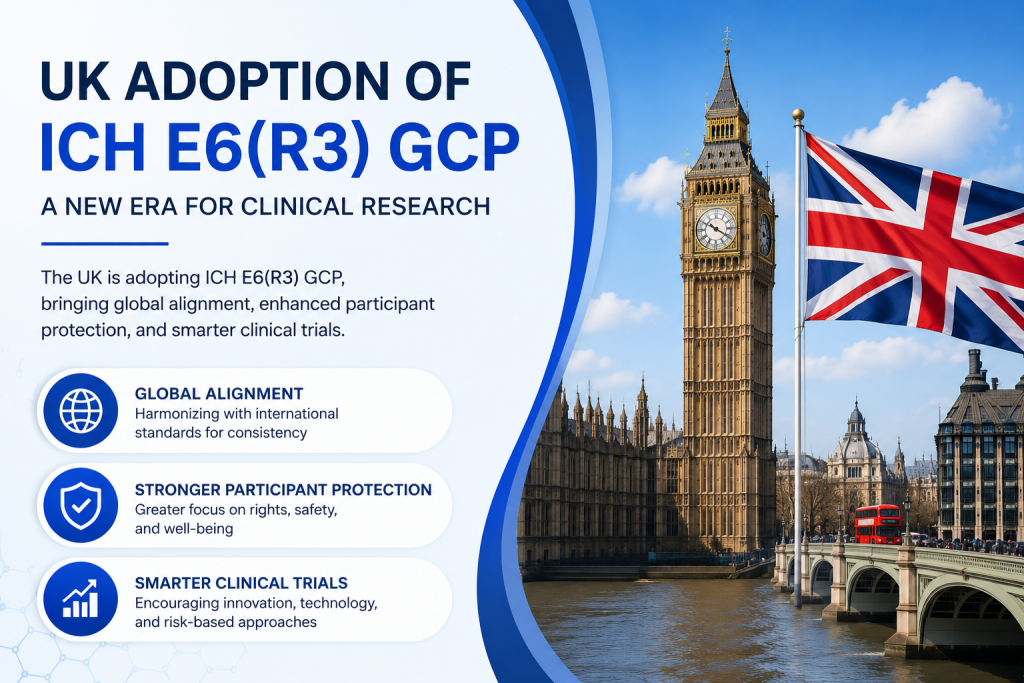
  • Navigating the UK’s Adoption of ICH E6(R3) 

    The adoption of ICH E6(R3) represents an important shift in the evolution of Good Clinical Practice (GCP). The updated guideline reflects the growing complexity of modern clinical trials, including decentralized models, digital technologies, risk-based approaches, and increased data integration. 

    As the UK aligns with the revised framework, organizations are evaluating how operational processes, quality systems, and oversight models must adapt to remain compliant. 

    Why ICH E6(R3) Matters 

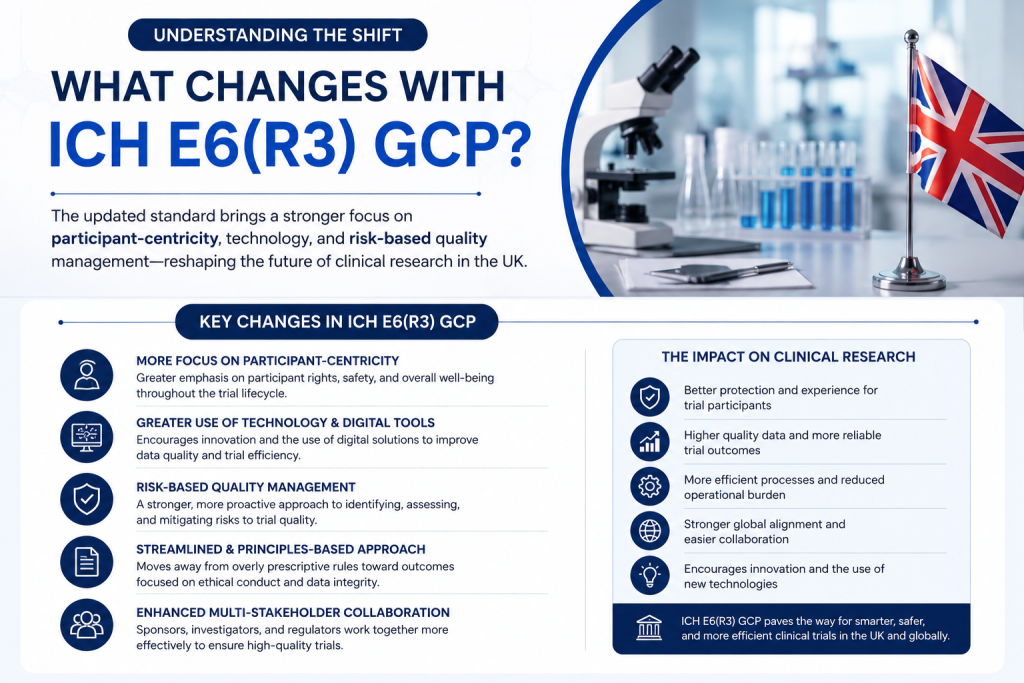
    ICH E6(R3) modernizes traditional GCP expectations by placing greater emphasis on: 

    • risk proportionality 
    • quality by design 
    • technology-enabled trials 
    • data governance 
    • vendor oversight 
    • patient-focused trial design 

    The revised framework recognizes that modern clinical trials increasingly rely on digital systems, remote processes, and third-party service providers. 

    A Shift From Process-Driven to Risk-Based Oversight 

    Earlier GCP approaches often focused heavily on standardized procedural compliance. 

    ICH E6(R3) places greater emphasis on identifying critical-to-quality factors and applying proportionate oversight based on study risks. 

    This shift encourages organizations to: 

    • focus resources on high-risk areas 
    • strengthen proactive quality management 
    • improve centralized oversight 
    • integrate risk-based decision-making into trial operations 

    Technology and Digital Trial Considerations 

    Modern clinical trials increasingly depend on: 

    • electronic systems 
    • remote monitoring 
    • wearable technologies 
    • cloud-based platforms 
    • decentralized workflows 

    ICH E6(R3) highlights the importance of ensuring these technologies are appropriately validated, monitored, and controlled throughout the study lifecycle. 

    Organizations must demonstrate that digital systems maintain: 

    • data integrity 
    • security 
    • traceability 
    • reliability 
    • regulatory compliance 

    Vendor and Service Provider Oversight 

    As clinical trial outsourcing continues to expand, sponsor oversight responsibilities remain a major regulatory focus. 

    ICH E6(R3) reinforces the importance of: 

    • vendor qualification 
    • documented responsibilities 
    • ongoing oversight 
    • quality management controls 
    • communication processes 

    Sponsors remain ultimately responsible for trial quality, even when operational activities are delegated to external providers. 

    Operational Challenges for Organizations 

    Adopting ICH E6(R3) may require organizations to review: 

    • SOP frameworks 
    • monitoring strategies 
    • quality systems 
    • technology validation approaches 
    • training programs 
    • risk management processes 

    Cross-functional alignment between clinical operations, quality assurance, data management, and regulatory teams will become increasingly important. 

    The Importance of Training and Readiness 

    Successful implementation of ICH E6(R3) depends not only on updated procedures, but also on workforce readiness. 

    Clinical research professionals must understand how revised GCP expectations apply to: 

    • remote trial activities 
    • risk-based monitoring 
    • digital technologies 
    • vendor oversight 
    • quality management systems 

    Ongoing education and practical implementation planning will play a key role in supporting compliance. 

    Related Learning 

    Whitehall Training offers learning solutions designed to support organizations and professionals preparing for ICH E6(R3) implementation. 

    Implementing ICH GCP E6(R3) Annex 2 Course 

    https://www.whitehalltraining.com/good-clinical-practice

    ICH GCP E6(R3) Refresher Training 

    https://www.whitehalltraining.com/good-clinical-practice

    Clinical Practice Learning Paths 

    https://www.whitehalltraining.com/learning-paths

    Conclusion 

    The UK’s adoption of ICH E6(R3) reflects the continued modernization of clinical research practices and oversight expectations. 

    Organizations that strengthen risk-based quality management, technology governance, and operational readiness will be better positioned to maintain compliance in an increasingly digital and decentralized clinical trial environment. 

  • Is AI Changing Clinical Research Faster Than We Expected?

    Introduction

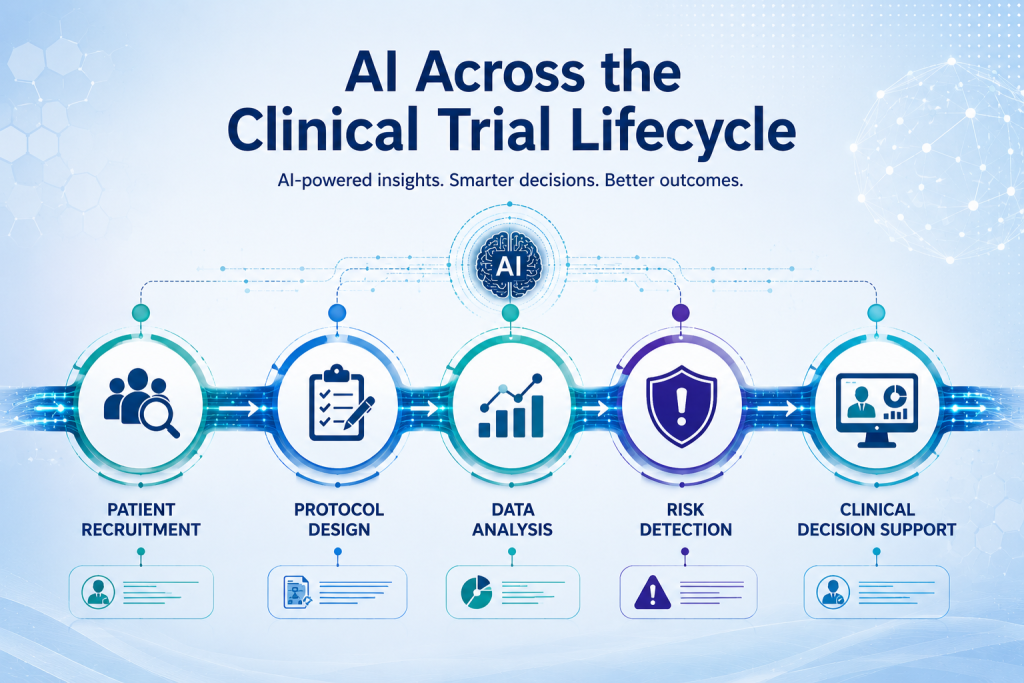
    Artificial Intelligence (AI) is no longer a futuristic concept in clinical research. From patient recruitment and protocol design to data analysis and risk detection, AI is increasingly being integrated into various stages of the clinical trial lifecycle.

    As clinical research continues to evolve, AI has the potential to improve efficiency, enhance decision-making, and support the development of new therapies. However, its growing use also raises important questions regarding oversight, data quality, and regulatory expectations.


    Why Is AI Gaining Attention in Clinical Research?

    Clinical trials generate vast amounts of data and involve numerous complex processes. Managing this information efficiently while maintaining quality and compliance remains a significant challenge.

    AI technologies can help researchers analyse large datasets, identify patterns, support faster decision-making, and improve operational efficiency. As a result, many organisations are exploring how AI can complement traditional clinical research activities and help accelerate innovation.


    Where Is AI Being Used Today?

    AI is already supporting several areas of clinical research.

    Patient Recruitment

    Identifying suitable participants is often one of the most time-consuming aspects of a clinical trial. AI can assist by analysing healthcare records and matching patients to study eligibility criteria more efficiently.

    Protocol Design

    AI-powered tools can help researchers evaluate study designs, identify potential operational challenges, and optimise protocol development before trial initiation.

    Data Analysis

    Clinical trials generate large volumes of data. AI can support faster analysis by identifying patterns, trends, and anomalies that may require further investigation.

    Risk Detection

    AI-driven systems can help identify unusual data patterns and potential risks, supporting quality management and oversight activities throughout the study lifecycle.


    Potential Benefits of AI in Clinical Research

    The growing interest in AI is driven by several potential advantages:

    • Improved operational efficiency
    • Faster data processing and analysis
    • Enhanced patient recruitment strategies
    • Better identification of risks and trends
    • Support for evidence-based decision-making
    • Reduced administrative burden on research teams

    While AI is unlikely to replace clinical research professionals, it has the potential to help them work more effectively and focus on higher-value activities.


    Challenges and Considerations

    Despite its potential, AI also presents important challenges that organisations must address.

    Key considerations include:

    • Data quality and reliability
    • Transparency of AI-generated outputs
    • Regulatory expectations and compliance
    • Patient privacy and data protection
    • Human oversight and accountability

    Ensuring the responsible use of AI remains essential for maintaining trust, quality, and integrity within clinical research.


    Will AI Replace Clinical Research Professionals?

    One of the most common questions surrounding AI is whether it will replace human expertise in clinical research.

    While AI can automate certain tasks and assist with data processing, clinical research relies heavily on scientific judgement, ethical decision-making, regulatory compliance, and human oversight. These responsibilities cannot be fully delegated to technology.

    Rather than replacing professionals, AI is more likely to become a tool that supports researchers, helping them make better-informed decisions and work more efficiently.


    Conclusion

    Artificial Intelligence is becoming an increasingly important part of modern clinical research. Its ability to support patient recruitment, protocol design, data analysis, and risk detection presents exciting opportunities for the industry.

    However, successful implementation will depend on balancing innovation with appropriate oversight, regulatory compliance, and human expertise.

    As AI technologies continue to evolve, understanding their role and limitations will be essential for clinical research professionals seeking to navigate the future of the industry. Developing AI-related knowledge and skills can help professionals remain prepared for emerging trends and evolving industry expectations.


    Explore AI Training Opportunities

    As AI continues to influence healthcare, pharmaceuticals, and clinical research, professionals may benefit from developing a deeper understanding of AI applications, governance, and implementation.

    Whitehall Training offers specialised learning opportunities including:

    📘 AI in Healthcare and Pharmaceuticals

    https://www.whitehalltraining.com/ai-clinical/ai-in-healthcare-and-pharma

    📘 AI Bootcamp: Copilot for Clinical, Pharmacovigilance & Regulatory Teams

    https://www.whitehalltraining.com/ai-clinical/ai-bootcamp

    📘 Clinical Research Associate (CRA) Learning Path

    https://www.whitehalltraining.com/learning-path/cra-guide

    📘 ICH GCP (E6 R3)

    https://www.whitehalltraining.com/good-clinical-practice/english-r3-version

    📘 ICH GCP (E6 R3) Refresher

    https://www.whitehalltraining.com/good-clinical-practice/r3-version-refresher

    For more professional development opportunities, visit:

    🌐 www.whitehalltraining.com

  • Elevate Your Life Sciences Career through Learning Paths

    Elevate Your Life Sciences Career through Learning Paths

    Introducing Whitehall Training’s New Comprehensive Learning Paths

    In an industry where regulations evolve as fast as the science itself, staying ahead isn’t just an advantage—it’s a necessity. Whether you are navigating the complexities of Pharmacovigilance, mastering Clinical Research, or ensuring GxP compliance, the depth of your expertise defines your impact.

    At Whitehall Training, we’ve spent years helping professionals stay compliant and competent. Today, we are thrilled to announce a significant evolution in how we help you learn: The Launch of our Specialized Learning Paths.

    Instead of piecing together individual modules, these paths offer a structured, curated journey through a specific domain, ensuring you gain a 360-degree understanding of your field while saving significantly on tuition.


    Explore Our 5 New Learning Paths

    We have bundled our most high-demand courses into five distinct tracks designed to take you from foundational knowledge to advanced mastery.

    1. Pharmacovigilance (GVP) Mastery

    The definitive track for drug safety professionals.

    • What’s Included: Drug Safety, Global Regulations, PV Audit, Signalling & Risk Assessment, and Device Safety & Vigilance.
    • Investment: £299 ~~(Original Price: £395)~~
    • Best for: PV Officers, Drug Safety Associates, and Regulatory Affairs specialists.

    2. Clinical Research Associate (CRA) Excellence

    Modernize your monitoring skills with a focus on documentation and technology.

    • What’s Included: CRA Essentials, GCP Refresher, Fundamentals of Clinical Trials, HIPAA, GDocP, and a dedicated AI module.
    • Investment: £229 ~~(Original Price: £265)~~
    • Best for: Aspiring and practicing CRAs looking to integrate AI and data integrity into their workflow.

    3. Distribution & Manufacturing (GDP/GMP)

    Ensuring quality and compliance across the supply chain.

    • What’s Included: GDP, GDP for Drivers, Quality Management Systems (QMS), and GMP.
    • Investment: £229 ~~(Original Price: £286)~~
    • Best for: Supply chain managers, logistics coordinators, and quality assurance teams.

    4. The Ultimate GxP Bundle

    A comprehensive “all-in-one” for total regulatory literacy.

    • What’s Included: GCP R3 (the latest standard), GCLP, GMP Annex 13, GLP, and GDP.
    • Investment: £299 ~~(Original Price: £405)~~
    • Best for: Quality Managers and consultants who need a bird’s-eye view of all laboratory, clinical, and manufacturing practices.

    5. Clinical Trials (GCP) + AI in Healthcare

    Future-proof your career at the intersection of ethics and innovation.

    • What’s Included: GCP R3, Fundamentals in Clinical Trials, and AI in Healthcare.
    • Investment: £149 ~~(Original Price: £285)~~
    • Best for: Clinical researchers and healthcare tech professionals looking to lead the digital transformation.

    Why Choose a Whitehall Learning Path?

    “The shift toward AI and updated GCP R3 guidelines means that yesterday’s training isn’t enough for tomorrow’s challenges.”

    By choosing a Learning Path, you aren’t just taking a course; you are:

    • Ensuring Full Compliance: We’ve mapped these courses to meet the most current global standards.
    • Saving Time: No more searching for disparate modules; we’ve laid out the most logical progression for you.
    • Maximizing Budget: Save up to £136 compared to purchasing courses individually.

    Ready to Start Your Next Chapter?

    These paths are now live on our platform. Whether you are looking to upskill your team or accelerate your own career, there has never been a better time to invest in your professional development.

    [Click here to browse the Learning Paths and secure your launch pricing]

    Which of these paths aligns best with your 2026 career goals? Let’s discuss in the comments below!


    #LifeSciences #Pharmacovigilance #ClinicalResearch #GCP #GxP #WhitehallTraining #ProfessionalDevelopment #AIinHealthcare

  • Whitehall Training has been officially designated as a RAPS Recertification Approved Provider by the Regulatory Affairs Professionals Society (RAPS)

    Whitehall Training has been officially designated as a RAPS Recertification Approved Provider by the Regulatory Affairs Professionals Society (RAPS)

    We are thrilled to share a significant achievement in our commitment to clinical research excellence. Whitehall Training has been officially designated as a Regulatory Affairs Professionals Society (RAPS) Approved Provider.
    In an industry where compliance and regulatory knowledge are paramount, this accreditation serves as a powerful validation of the quality, accuracy, and global relevance of our training content.
    Spotlight on: ICH GCP (R3) International Course
    We are particularly proud to announce that our ICH GCP (R3) International Course has been officially certified under this new status.
    As the industry transitions from R2 to the modernized R3 guidelines, staying compliant is more critical than ever. This certification confirms that our R3 training meets the rigorous educational standards set by RAPS, ensuring that professionals receive credible, compliant, and industry-recognized instruction.
    What This Means for You
    For Regulatory Affairs professionals holding the Regulatory Affairs Certification (RAC), this approval means that completing our accredited courses now counts toward your recertification credits(6 points).
    Whether you are part of a Contract Research Organization (CRO), a Sponsor, or a dedicated research team, you can trust that our training is:
    ✔️ International: Designed for a global audience and applicable across borders.
    ✔️ Comprehensive & Up-to-Date: Reflecting the very latest in regulatory changes, including the nuances of the R3 update.
    ✔️ Officially RAPS Accredited: Meeting the gold standard for regulatory education.
    Our Commitment to Quality
    At Whitehall Training, our mission has always been to support clinical research teams with high-quality learning solutions that are accessible and practical. This recognition by RAPS is not just a badge on our website; it is a promise to our learners that we are dedicated to their professional growth and the integrity of clinical research worldwide.
    Ready to update your compliance status? Explore our RAPS-accredited ICH GCP (R3) course today and ensure your team is ready for the future of clinical trials.
    https://www.whitehalltraining.com/good-clinical-practice/english-r3-version

  • Beyond GCP & GLP: Unpacking the Gold Standard for Clinical Trial Labs via GCLP

    Beyond GCP & GLP: Unpacking the Gold Standard for Clinical Trial Labs via GCLP

    Introduction: The Laboratory’s Dilemma in Clinical Research

    In any clinical trial, the data generated by laboratories is foundational to determining the safety and efficacy of a new therapy. This central role, however, places laboratories in a unique regulatory gray area, creating a significant compliance challenge. For any organization involved in clinical research, addressing this gap is not just a matter of best practice; it is a strategic imperative for mitigating risk and ensuring data defensibility.

    The primary standard for clinical research, Good Clinical Practice (GCP), provides an essential framework for protecting patient safety, rights, and well-being, consistent with the ethical principles of the Declaration of Helsinki. Yet, it barely references the specific, detailed activities performed in a clinical laboratory. On the other hand, Good Laboratory Practice (GLP) offers highly prescriptive guidance but is designed for non-clinical safety testing of items like pharmaceuticals and pesticides, not for samples from human trial subjects. GLP lacks the patient-centric focus on ethics, consent, and confidentiality that is the cornerstone of GCP.

    This leaves a critical gap. How can laboratories ensure their processes are rigorous and controlled while also upholding the profound ethical obligations of clinical research? The answer is Good Clinical Laboratory Practice (GCLP), a set of standards purpose-built to bridge this divide and provide a practical framework for excellence.

    1. The “Why”: Bridging the Critical Gap Between GCP and GLP

    Good Clinical Practice (GCP) is the legal and ethical standard for conducting clinical trials, but its guidance for laboratory work lacks the necessary detail to be practical. It establishes the critical importance of patient safety and rights but doesn’t prescribe the specific controls needed for robust laboratory analysis.

    Attempting to fill this void with Good Laboratory Practice (GLP) is inappropriate and strategically unsound. GLP regulations apply strictly to non-clinical safety studies and were never intended for the analysis of clinical samples from human trials. More importantly, GLP does not address the core principles of GCP, including medical ethics, informed consent, and patient confidentiality. Furthermore, the very nomenclature of GLP can conflict with that used under GCP, creating procedural and documentation confusion.

    Recognizing this gap, a global effort emerged to create a unified standard. This began with the Research Quality Association (RQA) publishing its GCLP guidance in 2003, a framework that was subsequently adopted by the World Health Organization (WHO). This was followed by more specific guidance from national bodies like the UK’s MHRA, the Indian Council of Medical Research, and the US DAIDS/NIAID. Today, the European Medicines Agency (EMA) 2012 reflection paper is a key reference document globally. While GCLP is not a law in itself, this history demonstrates a powerful international consensus, giving the principles significant weight and providing a clear indication of what regulatory inspectors expect.

    2. The Foundation: Establishing a Framework for Success

    GCLP implementation begins with a robust organizational structure where accountability is clear and processes are standardized.

    Personnel & Organization: GCLP demands that roles and responsibilities are precisely defined and documented before any trial work commences. Laboratory Management is explicitly responsible for ensuring sufficient resources are available and that all personnel have up-to-date job descriptions. Key roles for Scientific Analysis, Quality Assurance, Reporting, and Archiving must be identified. An “Analytical Project Manager” (or equivalent) must be named to assume overall responsibility for the conduct and reporting of the analysis. Every individual must be appropriately educated, experienced, and trained for their specific role, including GCLP-relevant training in GCP principles, with all training documented in current records.

    Contracts & SOPs: Formal agreements or contracts must be in place between the laboratory and the trial sponsor before initiating any work. These documents define the exact scope of work and must not conflict with the clinical trial protocol. Underpinning all operations must be a comprehensive system of written Standard Operating Procedures (SOPs), which provide detailed, consistent instructions to ensure the quality and integrity of all work performed.

    3. The Execution: A Masterclass in Process Integrity

    GCLP provides a clear roadmap for the day-to-day conduct of laboratory work, ensuring integrity from start to finish. This entire process is anchored by the analytical plan, which serves as the central, binding document against which all work is performed and measured.

    The clinical trial protocol provides the foundation, but a more detailed analytical plan or work instruction must be created. This plan specifies the exact methodologies, sample handling criteria, and reporting routes, and should be agreed upon with the sponsor. All subsequent work is conducted against this plan.

    Managing deviations from this established plan is a critical compliance function, and GCLP requires distinct procedures for different types of divergence:

    Deviations from the Protocol or Plan: For any serious divergence from the clinical protocol, analytical plan, or contract, procedures must ensure timely and effective communication with the sponsor. The sponsor must be informed immediately to assess the potential impact on subject safety and the integrity of the trial data.

    Deviations from Laboratory SOPs: When a deviation occurs from the lab’s internal procedures, it must be assessed and documented within the laboratory’s quality system. If the deviation has the potential to impact trial data integrity, subject confidentiality, or safety, it must also be reported to the sponsor. However, minor SOP deviations with no such impact can be managed internally, with the decision-making process fully documented for an audit trail.

    The entire lifecycle of a sample—from clinical kit preparation and sample receipt to tracking, storage, and final analysis—is governed by GCLP procedures. These processes are designed to maintain the absolute integrity and security of each sample, ensuring a complete and verifiable chain of custody.

    4. The Cornerstone: Putting the Patient First, Always

    The most critical function of GCLP is to embed the ethical tenets of GCP directly into the fabric of laboratory operations, ensuring the patient remains the central focus.

    Patient Safety: Laboratories must have clear procedures for identifying and promptly reporting any unexpected or out-of-range results that could impact a trial subject’s safety. This ensures that clinically significant data is communicated quickly to the sponsor and investigator.

    Patient Privacy: A subject’s right to privacy and confidentiality is paramount. This principle means that no subject identifiers, such as a full name, should be received by an off-site laboratory. Processes must be in place to handle any accidental breaches of this confidentiality.

    Informed Consent: The informed consent signed by a subject only covers the work specified in the clinical protocol. If additional work on samples is requested, the laboratory has a responsibility to ensure consent is not breached by seeking assurance from the sponsor that this is the case. The appropriate protocol amendments must be in place before any additional analysis is performed.

    This unwavering focus on the trial participant’s welfare is captured perfectly in the guiding principle of ICH GCP:

    “the rights, safety, and well-being of the trial subjects are the most important considerations and should prevail over interest of science and society”

    5. The Guardians: Weaving Quality into the Fabric of the Lab

    GCLP relies on two distinct but complementary quality functions to ensure data is accurate and reliable.

    Quality Control (QC): QC consists of the integral, real-time checks performed during laboratory activities to minimize the risk of mistakes. These are operational checks designed to catch errors as they happen. Examples include using QC samples within an analytical run or having a second person check manual data entry for accuracy.

    Quality Assurance (QA): QA is a set of independent, planned activities, such as audits, that provide oversight. The QA function ensures that work is performed in compliance with GCP, the clinical protocol, and internal policies and SOPs, thereby safeguarding data integrity. To ensure objectivity, QA personnel must be independent of the work they are auditing.

    6. The Legacy: Archiving for the Future

    The responsibility for data does not end when a report is issued. GCLP mandates the long-term retention of all trial-related documentation, creating the ultimate proof of the quality and credibility of the work performed.

    This requirement covers both study-specific data and essential facility records. The list of facility records is extensive and includes items such as: training records, SOPs, equipment validation and maintenance records, QA audit reports, organisation charts, and fridge and freezer temperature records. The fundamental purpose of this comprehensive archive is to make it possible to fully reconstruct the clinical trial many years after its completion, providing irrefutable evidence of compliance.

    Archiving presents significant challenges. Facilities must be secure against damage and unauthorized access for both paper and electronic records. Specific issues, like the known fading of data printed on thermal paper, require proactive solutions such as making certified copies. For electronic data, laboratories must have a strategy to ensure long-term readability and integrity—a complex task given the rapid evolution of technology and software.

    Conclusion: A Final Thought on Quality and Credibility

    Good Clinical Laboratory Practice is not merely a set of optional guidelines; it is an indispensable framework for any laboratory involved in clinical research. By integrating the ethical mandate of GCP with the procedural discipline of a quality management system, GCLP ensures the generation of reliable, high-quality, and ethically sound data. This data, supported by a complete and defensible archive, forms the bedrock upon which the safety and efficacy of modern medicines are built, providing the credible results necessary for regulatory approval and public trust.

    As laboratory science and data systems continue to evolve, what will be the next frontier in ensuring the integrity and GCLP compliance of clinical trial data?

    For interactive GCP,GLP,GCLP trainings, please visit https://whitehalltraining.com/

    #GCLP #ICHGCP #E6R3 #GLP #ClinicalTrials #Biomarkers #CentralLab #DataIntegrity #RBQM #eLIMS #QualityByDesign #Whitehalltraining